
Ayurveda as Self Care with Monica Seligmann of Newark Prenatal Massage and Yoga | The Doshas and Motherhood + Abhyanga Self Massage

Updated: Dec 5, 2025

Self-care isn’t indulgence, and it’s not about escaping the demands of motherhood. It’s about creating the inner steadiness you need to meet those demands. When mothers have reliable ways to replenish what they give of themselves each day, it helps prevent the otherwise inevitable burnout and makes it possible for them to show up as the version of themselves that they want their children to experience.
As a mother, finding your own way to practice self-care is essential, because no two of us have the same needs, schedules, or sources of stress. What restores one person might not work for another-- and that’s okay. The goal isn’t to follow a perfect routine, but to notice what genuinely supports your energy and well-being and to try to make that a priority. Whether it’s a morning run, a relaxing bath, a creative practice, a night out with friends, or something entirely different, choosing what fits your life makes self-care sustainable rather than just another obligation.
It is my goal in this interview series to explore the many ways mothers carve out time to nurture themselves. With that in mind, I visited Monica Seligmann of Newark Prenatal Massage and Yoga at home to learn more about her Ayurvedic routines and explore the deep connection between self-care and caregiving.
For Monica, Ayurveda has become an essential part of staying grounded and present as a mother. Despite the demands of parenthood, she has remained committed to the daily practices that regulate her mind, body, and nervous system. Her Ayurvedic routines offer practical tools to manage stress, nourish herself, and be fully available for her daughter.

M: Through Ayurveda, I am connecting back to my feminine energy, prioritizing creativity, and connecting back with Mother Earth. Ayurveda is recognizing the nature that's in my body and aligning with it and treating it with Mother Nature-- with the earth and not with pharmaceuticals. For example, if I have a headache, I would not reach for Advil-- I would get an herb. I would treat my headache with nature. But just as important, I am also getting up before 6am, eating my meals at the same time every day. This helps to align my daily habits with the Earth and its natural rhythms. It is extremely important to regulating our nervous systems, to regulating our circulatory system that we are connected to the Earth. We think we are separate, but we are not.
Ayurvedic Basics:
Ayurveda, often called “the science of life,” is an ancient system of wellness from India that focuses on balancing the mind, body, and spirit. At its core, Ayurveda emphasizes understanding and working with your body’s unique energies (Vata, Pitta, and Kapha) rather than following a one-size-fits-all approach. What you eat, the herbs you incorporate, and the way you structure your day can all help support digestion, boost immunity, and sustain energy. By recognizing your natural constitution and the rhythms of your body, you can make choices that support long-term health and vitality.
Doshas and Motherhood: Vata, Pitta, and Kapha
Ayurveda can feel abstract at first and admittedley there is a lot to learn, but the doshas-- Vata, Pitta, and Kapha-- show up in motherhood in incredibly familiar ways. They’re simply patterns of energy that influence how you think, feel, and move through your day. When life is balanced, these energies help you stay creative, focused, and steady. When life and motherhood becomes overwhelming (as it often does), each dosha can tip out of balance in ways you’ve probably felt before. Everyone has a unique balance of the three doshas, and understanding your dominat dosha can help guide self-care, diet, and lifestyle choices so you can stay balanced.

1. Vata – The Energy of Movement
Qualities: Light, dry, cool, mobile, creative, quick-thinking
Governs: Circulation, breathing, nerve impulses
Imbalance signs: Anxiety, dry skin, constipation, irregular sleep
How Sensory Overload Affects Vata:
Moms constantly rushing, multitasking, or taking in too much noise can strain Vata. This often feels like scattered thoughts, difficulty focusing, anxiety, or feeling ungrounded. Too many decisions, too much stimulation, and too little pause all aggravate this energy.
Balance tips: Warm, grounding foods; consistent routines; gentle movement; moisturizing the skin.
2. Pitta – The Energy of Transformation
Qualities: Hot, sharp, intense, focused, energetic
Governs: Digestion, metabolism, energy production
Imbalance signs: Irritability, heartburn, inflammation, overheating
How Emotional Intensity Shows Up as Pitta:
The stress of managing a household, work, and kids all at once can ignite Pitta. When overheated, it shows as irritability, snapping easily, self-criticism, or burning through patience quickly. It can be a feeling of being “on fire” inside when life is intense.
Balance tips: Cooling foods; moderation of heat and intensity; calming practices like meditation.
3. Kapha – The Energy of Structure
Qualities: Heavy, slow, steady, nurturing, grounded
Governs: Strength, immunity, stability
Imbalance signs: Lethargy, congestion, weight gain, attachment
How Exhaustion or Heaviness Shows Up as Kapha:
Moms carrying a heavy emotional or physical workload may feel Kapha imbalance. This shows as fatigue, sluggishness, emotional heaviness, or a sense that even small tasks take extra effort. Everything feels harder than it should.
Balance tips: Energizing, light foods; regular activity; variety and movement to stimulate energy.

Abhyanga
Understanding your dosha gives insight into your body’s natural tendencies and highlights areas that may need extra care or balance. In Aryveda, this balance can be supported through diet, daily routine, and Abhyanga, or self-massage. Abhyanga is one of the most accessible Ayurvedic practices for bringing harmony into your life. By selecting oils and massage techniques that align your dosha, you can calm Vata, cool Pitta, or energize Kapha, all while nurturing your body, moisturizing your skin, soothing your nervous system through slow, mindful movement, and "loving on yourself".

For Monica, Abhyanga is a meaningful daily ritual. This ancient self-massage with warm, herb-infused oils provides a simple yet deeply restorative way to support the body, calm the nervous system amid busy days-- this offers both physical care and emotional grounding. As Monica walked me through her self massage routine, it became clear how a practice rooted in tradition can serve as a stabilizing, supportive force in modern motherhood. The practice is so simple.
M: "I am a single mom and my Abhyanga practice gives me the comfort of touch. I am giving myself the love we all need as humans through self touch. As humans, we all need loving touch. So this truly is a self love moment. I set my intention. I do mantras. This is my time to love on myself."
You don’t have to be a trained massage therapist like Monica to practice Abhyanga!
Here are some simple tips for bringing this self-care ritual into your own home:
How to Do Self-Abhyanga at Home:

1. Prepare Your Space
Find a quiet, warm spot and lay down a towel to catch any oil.
Slightly warm your oil before beginning (sweet almond, sesame, or coconut are all great choices).
Consider the qualities of your dosha when choosing your oil:
Vata: warming oils like sesame to ground and nourish
Pitta: cooling oils like coconut to soothe heat and intensity
Kapha: lighter oils like sunflower or almond to energize and invigorate
2. Set Your Intention
Take a few deep breaths. Focus on caring for your body and calming your mind. You might also set a dosha-specific intention:
Vata: “I am grounded and steady.”
Pitta: “I am calm and balanced.”
Kapha: “I am energized and light.”
3. Massage Your Body
Move slowly, gently, and lovingly. Abhyanga is about relaxation, not pressure. Even 10–15 minutes is beneficial. You can also adapt the strokes to support your dosha:
Vata: slow, circular motions to warm and calm
Pitta: gentle, smooth strokes to cool and soothe
Kapha: firmer, invigorating strokes to stimulate energy
Massage Steps:
Head & Face: Rub your scalp and temples in small circles; gently massage forehead, cheeks, and jaw.
Neck & Shoulders: Use long strokes and circular motions to release tension.
Arms & Hands: Stroke from shoulders to wrists, massaging palms and fingers.
Chest & Torso: Use circular or sweeping motions over chest and stomach.
Legs & Feet: Massage thighs down to ankles, focusing on knees and calves; don’t forget the feet. Sometimes massaging just your feet is all the time you have, and that alone can feel incredibly grounding and soothing.
4. Finish Mindfully
Sit quietly for a few moments to absorb the calming effects. Wrap yourself in a warm towel or take a shower to rinse off excess oil. Take note of how your body feels.

M: In massage school, they talked about how oil is a naturally occurring thing in the body, and so my specific massage school wanted us to use always pure oil, never a cream blend with God knows what in it. They wanted us to use oil, because oil is what the body recognizes and can truly absorb deep into the tissues. The skin doesn't have the digestive system to process things. So whatever you put on your skin, it goes right in your bloodstream-- there is no filtration system. The oil I am using for Abhyanga is a special herbal blend. These herbs are specific to my needs and are my own personal Auryvedic treatment.
A: You have been developing this practice since your daughter was born five years ago, Have there been any stages of motherhood that you found it more difficult to practice Ayurveda and why? Why has it been important to you, to be so disciplined in your practice?
M: I am my daughter's sole parent-- not just a single parent. My daughter's dad lives in another country and I am on 24/7. I have to make sure that my mind and body are functioning optimally to do that.

I think it was my upbringing of having an alcoholic parent who is now deceased, and being hurt by that parent through their actions and lifestyle, that I am so acutely aware, and will do everything in my power, to not hurt my daughter by the way I live. Maybe it is a super intense trauma response, but I feel as though this what, in Ayurveda and in yoga, is called my dharma, or my duty and responsibility to my daughter in this life. This is out of immense love for her.
I've done my own internal work of caring for myself, But I know firsthand how much pain there can be for a child.
How we parent our children when they're young is with them for life-- ask any psychologist or psychiatrist. Childhood trauma is with you for life, and you just have to learn how to live with it, and be compassionate to yourself, and get rid of the perfectionism of being perfect and healed. There is no healed, you know?
This is who I am, and I love myself, and I surround myself with the things that I need. And so it is my upbringing, paired with my current circumstance, that I need to live this way. Ayurveda has given me tools and guidelines that are that wrapped around the science of how the mind and body work.
My expierience of motherhood is demanding, through and through, I don't get a break. My family isn't extremely supportive, and so it's all me. If I need a break, I either need to,
ask tentatively and pick the right time and mood to ask, but not ask too much, and or I Just pay, and that's a financial toll.
So when I live ayurvedically, I am full of love and respect for what my mind and body need to be present for myself and my child. I am not stressing my body through my diet (I don't have the luxary of eating fast food because it will stress my mind and body and I will be too tired and lethargic to be able to run my business optimally to mke money to provide for my daughter. I can't do that. IO don't have a choice. And I am making sure that I move my body so that my body gets the right hormones and endorphins-- all the things that it needs to function optimally. Luckily, Ayurveda gives me the guidelines to follow so that I can do it all.
In addition to Monica's yoga and massage offerings, she also provides birth story processing, Dream Birth Magnetization energy sessions for her prenatal clients, hosts quarterly potlucks for mothers to connect, reiki, and embodiment coaching. you can learn more at Newark Prental Massage and Yoga or read an interview about her massage and yog practice HERE.

Resources for the Ayurvedic Curious:
Here are a few of the books that I picked up from the library that got me started with Auryveda. The author, Katie O'Donnell, also hosts a podcast which I have found helpful.


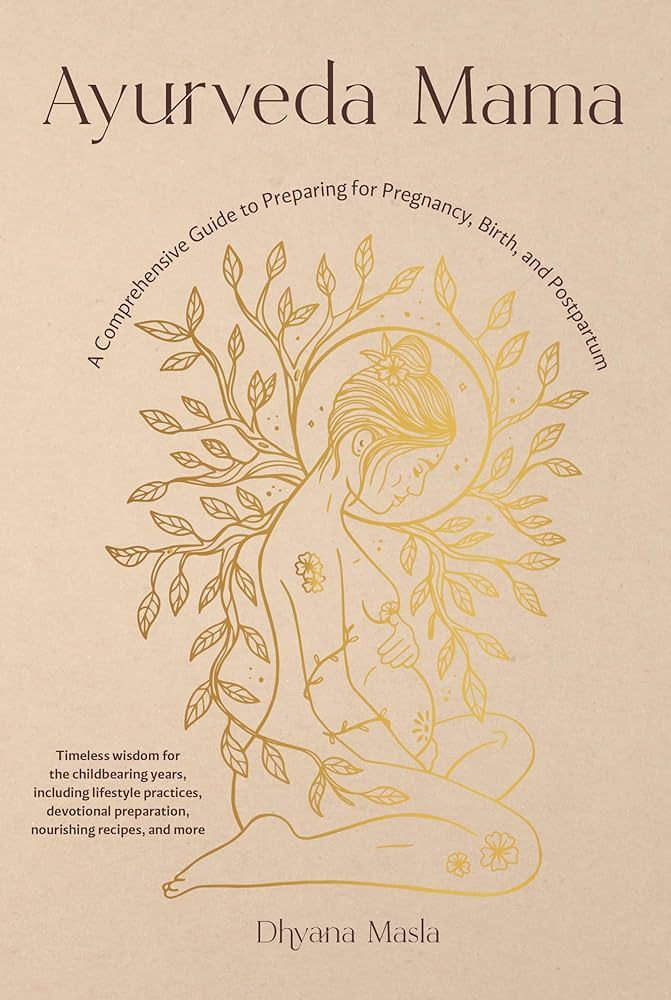
For those thinking about growing thier family, or who are already pregnant, I recommend this read:


Comments